GRAPEVINE, TEXAS, September 15, 2026
- Gartner client? Log in for personalized search results.
Gartner Enterprise Risk, Audit & Compliance Conference 2026 Grapevine: Day 1 Highlights
It’s not too late to join the conference
We are bringing you news and highlights from the Gartner Enterprise Risk, Audit & Compliance Conference 2026, taking place this week in Grapevine, Texas. Below is a collection of key announcements and insights coming out of the conference.
On Day 1 of the conference, we are highlighting sessions Audit 2030: Key Forces Shaping the Future of Internal Audit; No Plan, No Payoff: AI Business Impact Demands a Clear Strategy and Enhance ERM Risk Analysis With GenAI. Be sure to check this page throughout the day for updates.
Key Announcements
Audit 2030: Key Forces Shaping the Future of Internal Audit
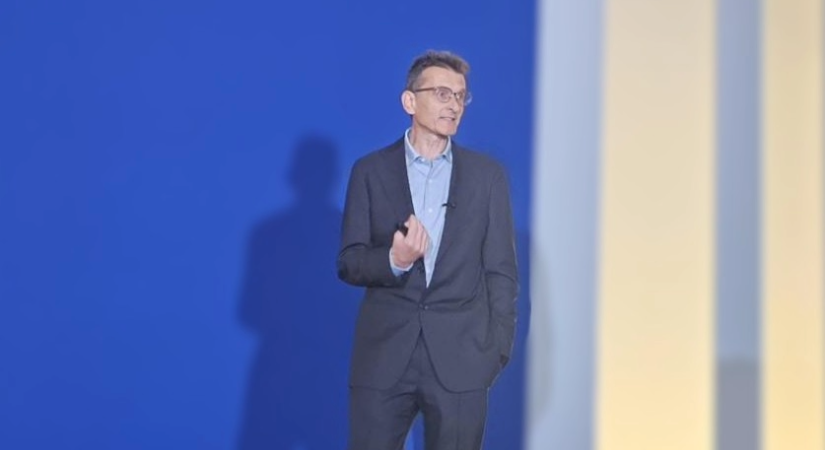
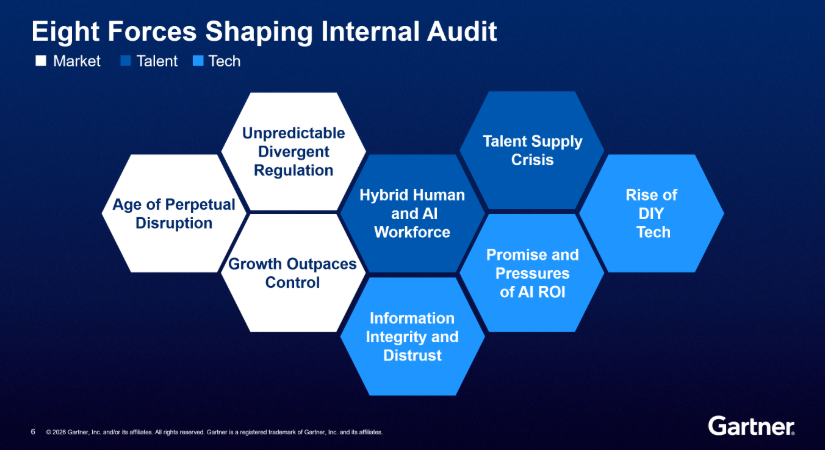
In this session, Stephen Osborne, Sr. Director Analyst at Gartner, explained the eight key forces shaping internal audit through 2030, with a focus on increasing regulatory complexity, the promises and pressures of AI ROI, and the transformation of workforce models.

Key Takeaways
- To stay effective, internal audit must adapt by prioritizing regulatory risk, embedding AI in audit processes, and developing multidisciplinary skills for a hybrid human-AI environment.
- Global regulatory fragmentation is increasing compliance costs and driving the need for localized technology and governance.
- AI adoption is reshaping audit, shifting the focus from technology deployment to proving strategic alignment, value realization, and trusted outcomes.
- Internal audit teams must prioritize analytical thinking, judgment, problem-solving, and professional skepticism over technology credentials alone.
- Audit leaders must embed intelligent automation into core workflows to effectively evaluate increasingly automated enterprise system
Journalists can receive additional information and/or request an interview with Stephen Osborne, by contacting Rob van der Meulen at rob.vandermeulen@gartner.com

It’s not too late to join the conference
No Plan, No Payoff — AI Business Impact Demands a Clear Strategy
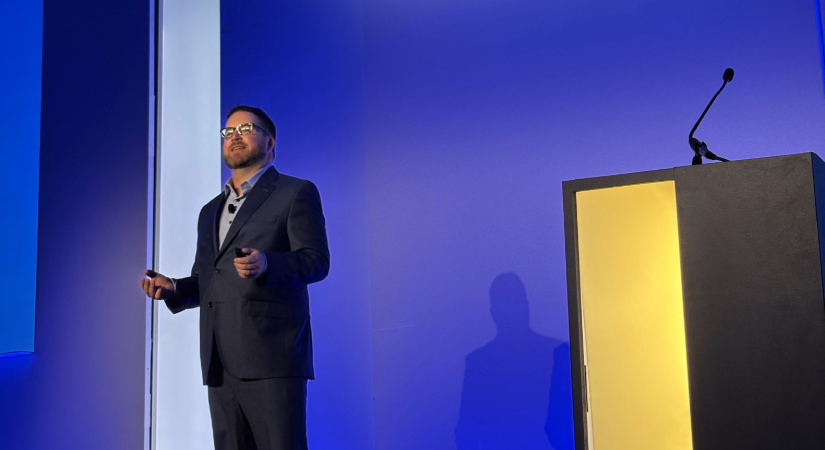
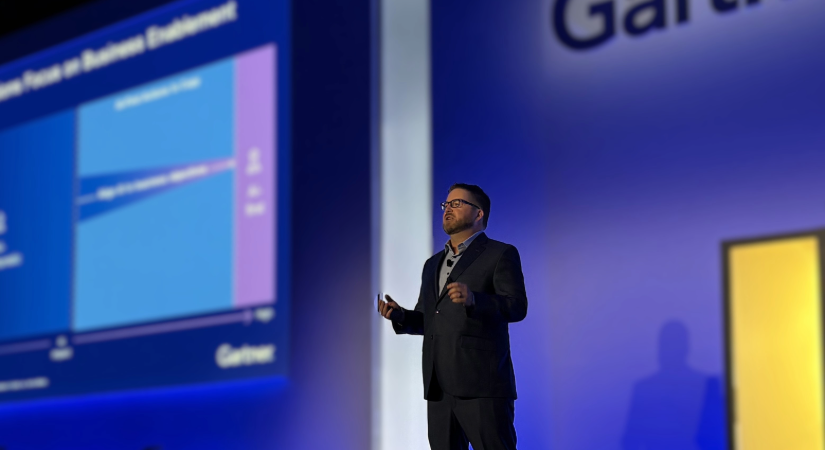
Organizations lacking a defined AI plan risk missing out on the full value and impact of their AI investments. In this session, Eren Fry, Sr. Director Analyst at Gartner, explained the importance of having a clear and actionable AI strategy to achieve tangible business outcomes.
Key Takeaways
A well-articulated AI strategy is essential for translating AI investments into measurable business impact.
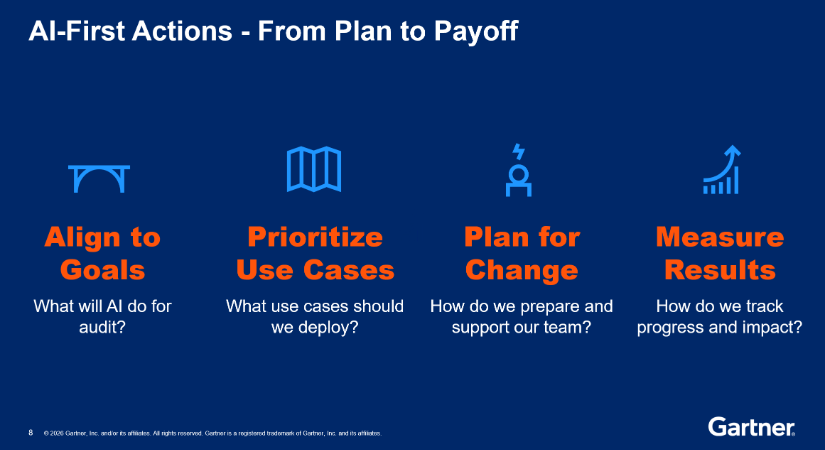
AI plans for audit should start by aligning to how AI can enable achievement of overall department objectives.
CAEs should define the level of impact they want to see from AI (optimization or transformation) then rigorously prioritize use cases to pilot based on value and feasibility criteria.
Plans should include a focus on change management and AI skills development to increase adoption rates and increase confidence in AI outputs.
Ongoing measurement and refinement are necessary to ensure AI initiatives deliver on business objectives and enable ongoing updates to plans.
Journalists can receive additional information and/or request an interview with Eren Fry, by contacting Rob van der Meulen at rob.vandermeulen@gartner.com
Enhance ERM Risk Analysis With GenAI
GenAI increasingly takes on the role of aggregating organizational knowledge. In this session, Alex Ossington, Director Analyst at Gartner, explained why this means enterprise risk management (ERM) teams must change how they create value, and how it will enable them to provide sharper insights.


Key Takeaways
- As GenAI plays an ever-growing role as an organization’s “wisdom aggregator” ERM must evolve from aggregating information to generating insights for executive leaders and the board to deliver distinctive value.
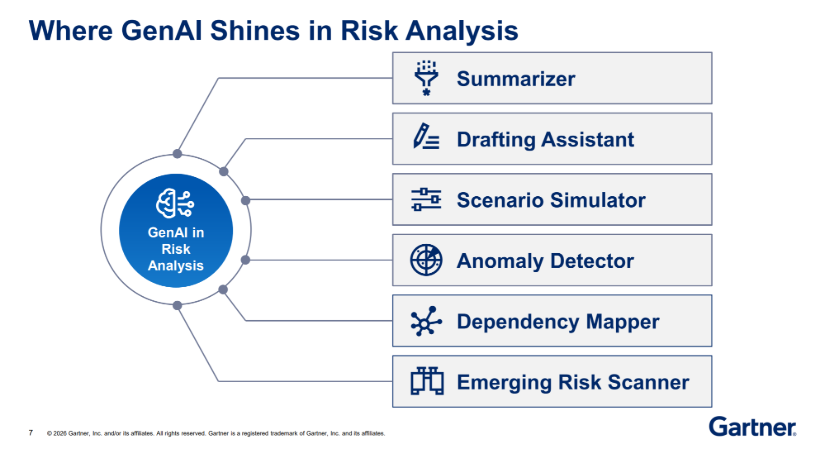
GenAI can support the full risk-analysis process, including risk evaluation, scenario development, interdependency mapping, emerging-risk detection and root-cause analysis.
ERM teams should use this capability to synthesize information from multiple sources, develop preliminary risk ratings and highlight areas where further evidence or leadership judgment is required.
To get started, ERM leaders should target one manual bottleneck for GenAI experimentation and use it to develop the technical and cognitive skills required to evaluate and refine AI-generated outputs within their teams, as well as building a prompt library to encourage wider use.
Journalists can receive additional information and/or request an interview with Alex Ossington by contacting Rob van der Meulen at rob.vandermeulen@gartner.com
Stay tuned for more updates from day 2 of the conference tomorrow.


About Gartner
Gartner (NYSE: IT) delivers actionable, objective business and technology insights that drive smarter decisions and stronger performance on an organization’s mission-critical priorities. To learn more, visit gartner.com.