Showcase your product operating model’s business impact and secure executive buy-in with proven communication strategies.
- Gartner client? Log in for personalized search results.
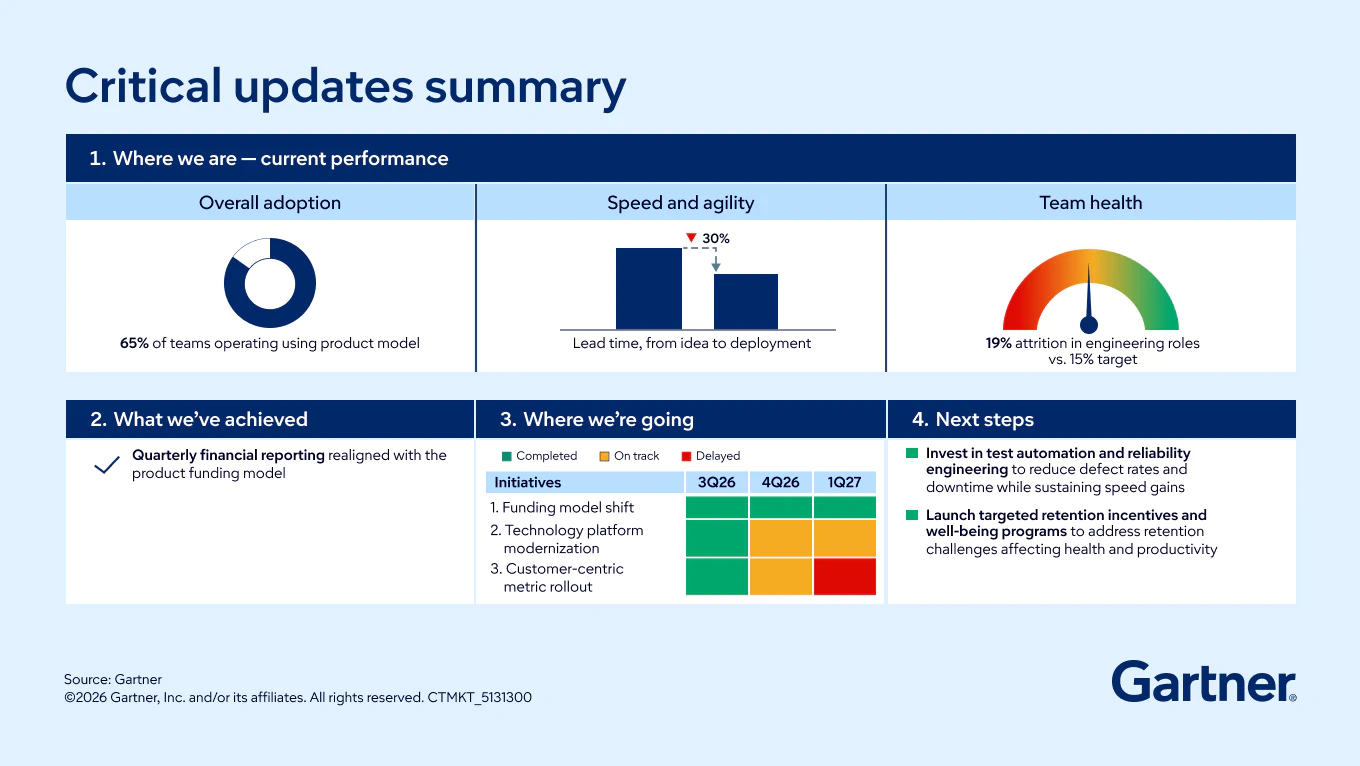

Why the product operating model demands clear communication
As Gartner Principal Analyst Sarah Baumunk notes, “Executive support is critical to the success of the product operating model, but software engineering leaders struggle to communicate its value and sustain ongoing support.” Without clear, compelling communication, even the best transformation efforts risk stalling. Leaders must articulate not just what the product model is, but why it matters and how it drives tangible business outcomes. This urgency is heightened by the need to align diverse stakeholders and maintain momentum throughout the transformation journey.
You might also like this webinar: Tiny Teams: New Organizational Structures for AI-Native Software Engineering
How to communicate the product operating model’s value
Effective communication is the cornerstone of successful product model adoption. Use these approaches to build understanding and secure ongoing support.
Introduce the product model with a strong “why statement”
Start by sharing the core reasons behind your shift to a product model. Leaders should clearly define what the product model is and how it differs from traditional project-based approaches. Use simple language and focus on the benefits that matter most to your stakeholders, such as increased speed, improved quality and greater business value.
Articulate the benefits and new ways of working
Explain the tangible advantages of the product model rooted in core business objectives, like enhanced cross-functional collaboration and more responsive delivery. Illustrate how the new structure works, including team roles and the shift to product funding. Visuals and examples help make these concepts real and relatable.
Communicate ongoing impact with compelling metrics
Software engineering leaders must regularly update stakeholders on the transformation’s progress using metrics that resonate: Think speed to market, customer satisfaction or cost-efficiency.
Highlight successful pilots or rollouts to build credibility and maintain enthusiasm. Tailor your communication to the audience. Executives want strategic outcomes while delivery teams need operational clarity.
Action steps to drive product model buy-in
To maximize executive support and stakeholder engagement, software engineering leaders should:
Use provided presentation templates to introduce and reinforce the product model’s value.
Share updates on business outcomes regularly, using metrics that matter to each audience.
Customize communications to address specific organizational needs and concerns.
Solicit feedback from stakeholders after each communication touchpoint to refine your messaging and address gaps in understanding.
What’s next for software engineering leaders
To sustain support for a product operating model, software engineering leaders must align success metrics to broader business objectives and establish clear measures for tracking desired outcomes. By defining target outcomes and measuring progress against them, organizations can better demonstrate software engineering value and its contribution to business goals; this is one critical step in the mandate to innovate and modernize in order to improve software engineering value delivery and costs.
Product operating model FAQs
How do you communicate the business value of the product operating model?
To communicate business value, connect the product operating model directly to outcomes that matter to stakeholders, such as faster delivery, higher product quality and improved customer satisfaction. Use clear, relevant metrics (like time to market or customer NPS) and real-world examples from your organization. Tailor your message to each audience, emphasizing how the model supports strategic goals and drives measurable impact.
How do you measure the value of a product operating model?
Value is measured by tracking business outcomes such as speed to market, product quality, customer satisfaction and cost-efficiency. Select metrics that resonate with your stakeholders and demonstrate clear improvements attributable to the product model.
Why is executive support critical for product operating model success?
Executive support ensures the necessary resources, alignment and sustained momentum for product model adoption. Leaders must communicate the model’s strategic value to secure buy-in and overcome resistance throughout the transformation.
Attend a Conference
Experience Applications conferences
With exclusive insights from Gartner analysts on the latest trends, sessions curated for your role and unmatched peer networking, Gartner conferences help you accelerate your priorities.
1 – 2 Mar 2027
Gartner Digital Workplace Summit
San Diego, CA

Drive stronger performance on your mission-critical priorities.